DailyWall
The study methods with the strongest research support are active recall (testing yourself instead of rereading) and spaced repetition (reviewing the same material over several days and weeks). Add interleaving (mixing problem types), explaining ideas in your own words, focused study blocks with real breaks, and enough sleep before the exam.
The best study tips aren’t secrets, but they are a little counterintuitive. The methods that feel most productive, like rereading your notes and highlighting the textbook, are the ones learning research rates as least useful. The methods that work best, like testing yourself and spreading revision out over weeks, often feel harder and slower while you’re doing them. That feeling of effort is part of why they work. This guide covers 25 study tips grouped by what they do: the two methods with the strongest evidence, techniques that deepen understanding, how to structure a study session, what to stop doing, and a plan for exam week. No magic hacks, just methods you can start using tonight.
The two study methods with the strongest evidence
In 2013, a team of psychologists led by John Dunlosky reviewed the research on ten popular study techniques and rated how useful each one was across different students, subjects and tests. Only two were rated highly useful: practice testing and distributed practice. In plain English: test yourself, and spread your studying out over time. If you change nothing else about how you study, change these two things.
Why do they work? Each time you pull an answer out of memory, you strengthen the route back to it. Rereading only puts the information in front of you again; it never asks you to find it. And spacing your reviews means you come back just as you’re starting to forget, which forces that effortful retrieval again. Cramming the night before can get you through a test, but much of it fades within days.
Tick the steps as you go
Active recall: how to test yourself properly
Active recall means retrieving information from memory instead of looking at it. In a well-known experiment by Henry Roediger and Jeffrey Karpicke, students who practised recalling a text remembered more of it a week later than students who spent the same time rereading it, even though the rereaders felt more confident. That gap between how learning feels and how well it lasts is the main reason students underuse this method.
Here are practical ways to build active recall into every subject:
Tick the steps as you go
Spaced repetition: a simple schedule that works
Spaced repetition goes back to Hermann Ebbinghaus, who described the “forgetting curve” in the 1880s: we forget new information quickly at first, then more slowly. Each well-timed review flattens the curve, so you can wait longer before the next one.
You don’t need a perfect algorithm. A common starting point is to review new material the next day, then after about three days, then a week later, then two weeks later. Flashcard apps can schedule this for you; a paper system works just as well.
Tick the steps as you go
Techniques that deepen understanding: interleaving, Feynman and more
Memorising facts is only part of studying. For maths, science and anything with problems to solve, you also need to know which method to use and why. These study techniques target understanding rather than memory alone. The 2013 review rated interleaving, self-explanation and elaborative questioning as moderately useful: promising, with more research needed.
Tick the steps as you go
How to structure a study session: Pomodoro and focus blocks
Good methods still need focused time. Most students study better in clearly defined blocks than in vague afternoons with the phone on the desk.
Tick the steps as you go
Study methods that waste time (and what to do instead)
Some of the most popular study habits are rated as low utility in learning research. They’re not useless, but they give much less learning per hour than they seem to.
Rereading feels productive because the material becomes familiar. But recognising something on the page isn’t the same as being able to recall it in an exam. Replace the second and third reading with self-testing.
Highlighting mostly decides what to study, not how. If you highlight, use it as a first pass, then turn highlights into questions.
Cramming can get you through tomorrow’s quiz, but it does little for the final exam or next year’s course that builds on it. Use spacing instead.
Studying to your “learning style”. Many students believe they are visual, auditory or kinesthetic learners and should study only that way. Reviews of the research, including a well-known 2008 review by Harold Pashler and colleagues, found little evidence that matching study methods to a preferred style improves results. The better question is what the material needs: diagrams for processes, spoken practice for languages, hands-on practice for skills.
Study tips for exams: the final week, the night before and the day
Good exam preparation starts weeks earlier, but the last days still matter. Use them for retrieval and rest, not for learning whole topics from scratch.
Tick the steps as you go
Study tips for motivation: how to start when you don’t want to
Motivation usually follows action rather than coming before it. The hardest part of studying is the first five minutes.
24. Make the first step tiny. “Open the book and answer one question” is easier to start than “study chemistry”. Once you’ve started, keep going if you can; if not, one question is still progress.
25. Make your plan visible. A study plan in a notebook is easy to ignore. A plan you see every time you pick up your phone, with today’s blocks and three topics, keeps nudging you back to work. Seeing a countdown to the exam and a few completed blocks also gives a real sense of progress.
It also helps to study at the same time and place each day, so sitting down becomes a habit rather than a decision, and to study with a friend who will quiz you, which combines accountability with active recall.
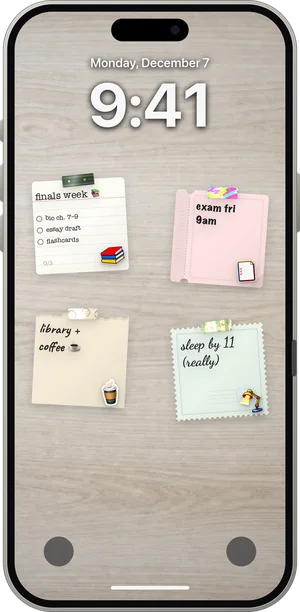
Put your study plan on your Lock Screen with DailyWall
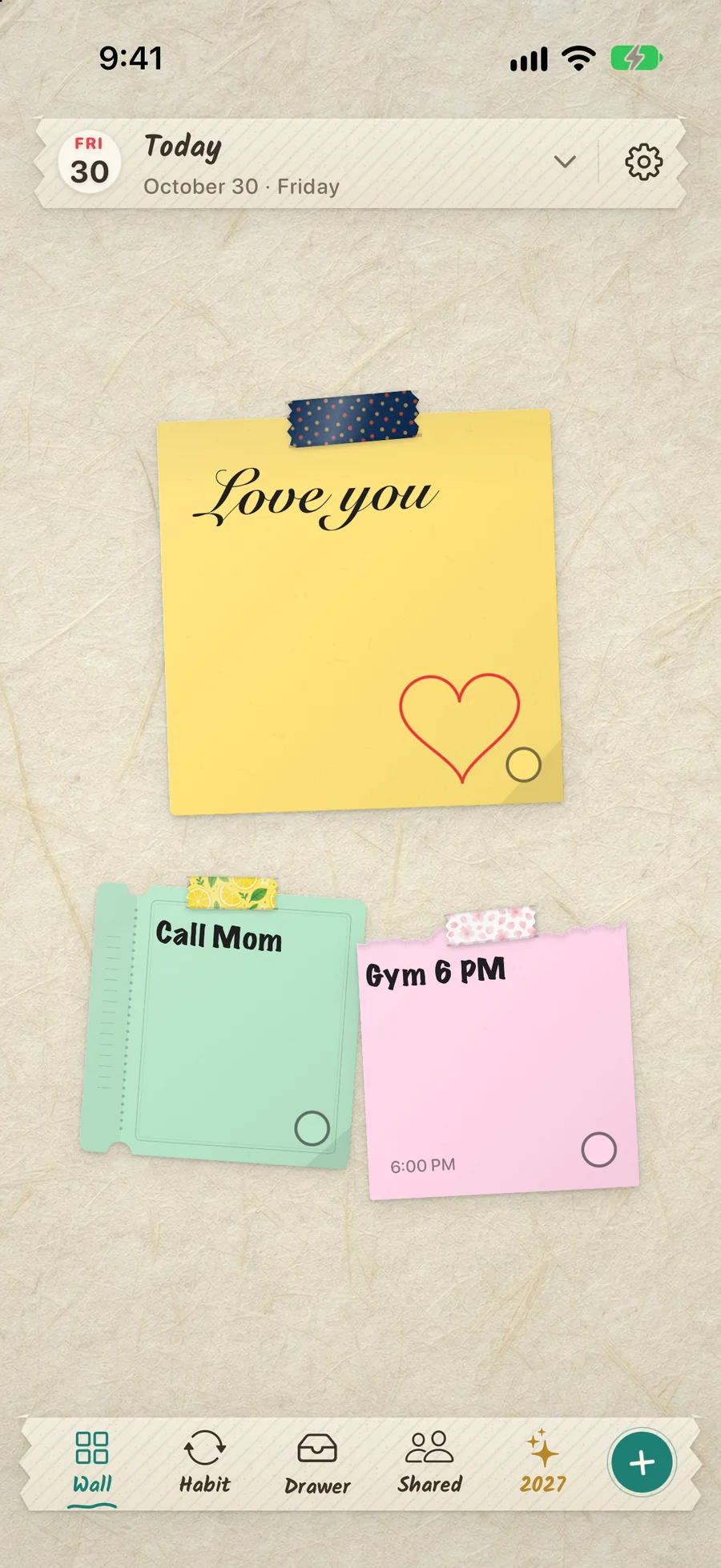
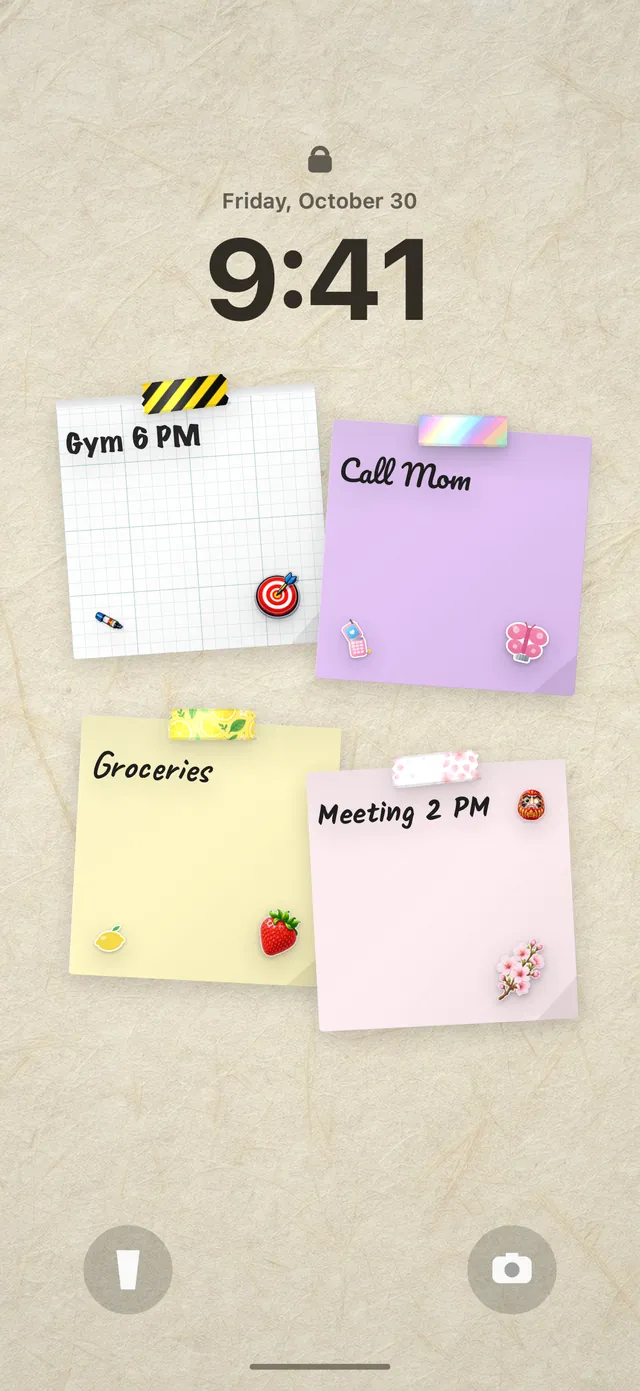
If you open your phone dozens of times a day, the Lock Screen is the best place for tip 25. DailyWall is an iPhone and iPad app where every day has its own wall of paper notes, and that wall becomes your Lock Screen wallpaper through a Shortcuts automation you set up once. When you tick off a topic, the Lock Screen updates by itself; nothing is saved to your Photos library.
For exam season, write today’s topics as a checklist, put the next exam’s date on its own note, and add one thing to memorise, like a formula or five vocabulary words. You’ll read it every time you pick up your phone, which is a little bit of spaced review for free. Our study planner Lock Screen post has six ready-to-copy layouts.
Tick the steps as you go
Questions people ask
What is the most effective study method?
Research most strongly supports practice testing (active recall) and distributed practice (spaced repetition). Test yourself instead of rereading, and review the same material across several days and weeks rather than in one long session.
How many hours a day should I study?
There’s no single right number; quality matters more than hours. Several focused blocks of 25 to 50 minutes with real breaks usually achieve more than long, distracted sessions. Increase the time gradually before exams rather than all at once.
Is it better to study in the morning or at night?
Study when you’re most alert, which varies from person to person. Whatever you choose, keep it consistent and avoid cutting into sleep, because sleep helps consolidate what you’ve learned.
Do learning styles like visual or auditory matter?
Reviews of the research have found little evidence that studying in your preferred style improves results. Choose methods that fit the material instead: diagrams for processes, speaking practice for languages, practice problems for maths.
What is the Feynman technique?
A way to check understanding: explain a concept in simple words as if teaching a child, notice where you get stuck, go back to the source, and simplify your explanation again. The places you struggle show what to study next.
Does cramming work?
Cramming can help with a test the next day, but much of the material fades quickly. Spreading the same study time over several days leads to better long-term memory, which matters for finals and later courses.