 DailyWall
Pick three to five small steps you can finish in the time you really have, for example water, a few minutes of movement, getting dressed and writing your top three tasks. Do them in the same order every day, prepare the night before, and keep your phone away for the first part. Start with 15 minutes and grow the routine only once it feels easy.
A morning routine doesn’t have to start at 5 a.m. or include an ice bath, a gratitude journal, a green smoothie and an hour of reading. The routines you see online are often someone’s best day, filmed. The morning routine that changes your life is the one you can still do on a rainy Tuesday when you slept badly. This guide helps you build that one. You’ll learn the five building blocks of a good morning, copy a 15, 30 or 60-minute routine, adapt it for school or working from home, and set up the evening before so the morning almost runs itself. At the end, there’s a simple way to keep the routine in front of you until it becomes automatic.
Why a morning routine helps (and why most fail)
A morning routine helps because it removes decisions. The first hour of the day is full of small choices: snooze or get up, check messages or shower, coffee first or clothes first. When those choices are already made, you start the day with energy left for the decisions that matter.
A good routine also gives you an early win. Making the bed, finishing a short stretch or writing your list are tiny, but they set a tone: you did what you planned before the day started making demands.
So why do most morning routines fail? Usually for one of three reasons. They’re too long for real life, so they collapse on the first busy day. They’re too far from your current habits, such as jumping from waking at 8:00 to 5:30 overnight. Or they depend on motivation, which is lowest exactly when you need it, right after the alarm. The plan below is designed around those three problems.
The 5 building blocks of a good morning routine
Almost every morning routine that lasts is built from the same five blocks. You don’t need all of them; pick the ones that fit you, in an order that feels natural.
Tick the steps as you go
A 15-minute morning routine (for busy mornings)
This is the routine to start with, even if you have more time. It’s short enough to do every day, which is what turns it into a habit.
Tick the steps as you go
A 30-minute morning routine
Once the 15-minute version feels automatic, add a calm block and a proper breakfast. This version suits most people with a normal workday or school day.
Tick the steps as you go
A 60-minute morning routine
An hour is a lot, and it isn’t better by default. It works best for people who want time for one bigger personal goal before the day starts, such as exercise, reading or a side project.
Tick the steps as you go
Morning routines for students and for working from home
For students. Mornings are often rushed and sleep is often short. Keep the routine to 15–20 minutes, prepare the bag and clothes the night before, and use the last two minutes to check today’s timetable and the one task that’s due. If you study in the morning before school, put the hardest subject first, while your energy is fresh. Our study tips post has more on when and how to study.
For working from home. The risk is the opposite: no commute means no clear start. Create a fake commute, such as a ten-minute walk before you sit down, and get properly dressed. Start work at the same time each day with the most important task, before you open email. Our productivity tips explain why the first focused hour matters so much.
The evening before: the secret to an easy morning
A good morning routine starts the night before. Every decision you make in the evening is one less decision when you’re half-awake. Five minutes is enough.
Tick the steps as you go
How to make your morning routine stick
Start smaller than you think. If 30 minutes feels possible, start with 15. A routine you complete every day for a month is worth more than a perfect one you do twice.
Chain the steps. Each step becomes the cue for the next one: after I turn off the alarm, I drink water; after I drink water, I make the bed. This is habit stacking, and our habit stacking post has more examples.
Keep the order fixed. The same order every day is what makes a routine automatic. Change the content later if you like, but not the sequence.
Have a minimum version. On bad days, do the two-minute version: water and your top three tasks. Doing something keeps the chain alive.
Make it visible. Most routines don’t fail because people decide to stop; they fail because people forget. Seeing the steps first thing in the morning helps a lot in the first few weeks.
Give it time. How long it takes for a routine to feel automatic varies a lot from person to person and from habit to habit; for some it’s a couple of weeks, for others a few months. Judge the routine after a month, not after three days.
Common morning routine mistakes (and easy fixes)
If your morning routine keeps falling apart, one of these is usually the reason. Each has a simple fix.
Tick the steps as you go
Keep your morning routine on your Lock Screen with DailyWall
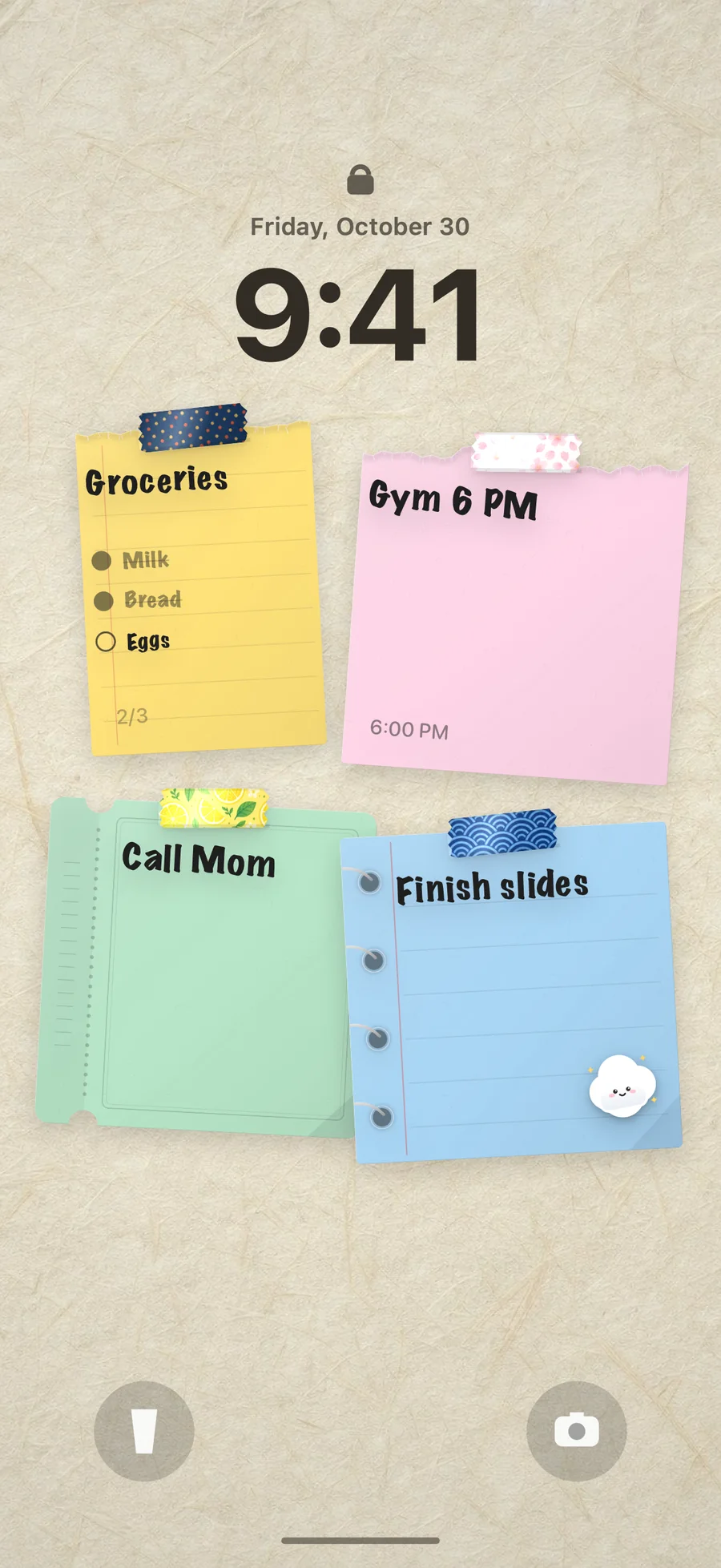
The first thing most of us look at in the morning is the phone. That makes the Lock Screen a good place for your routine: you see it when you turn off the alarm, before any app has a chance to pull you in.
DailyWall is an iPhone and iPad app where every day has its own wall of paper notes, and that wall becomes your Lock Screen wallpaper through a Shortcuts automation you set up once. Write your routine as a checklist on a repeating note, so it appears on every day’s wall, and add a time and a reminder if you like. Habit papers, such as making your bed, drinking water or stretching, hang themselves on your wall on the days you choose, and tapping + fills a dot. Your top three tasks can sit right next to them. For more ways to plan the rest of the day, see our guide to time management methods.
Tick the steps as you go
Questions people ask
What is a good morning routine?
A good morning routine is short enough to do every day and covers a few basics: a steady wake-up time, water and some movement, a few calm minutes, a quick plan for the day and getting ready. The best one is the one you can repeat.
How long should a morning routine be?
Fifteen to thirty minutes is enough for most people. Start with 15 minutes and add steps only once the short version feels automatic.
What time should I wake up for a morning routine?
At a time that gives you enough sleep and is roughly the same every day. Consistency usually matters more than waking very early. If you want to wake earlier, move your alarm by about 15 minutes a week.
Should I check my phone in the morning?
Try to leave messages and social media until after your first few routine steps. If your phone is your alarm, look at your plan for the day rather than your inbox.
How do I stick to a morning routine?
Start small, keep the same order every day, prepare the night before, link each step to the one before it, and have a two-minute minimum version for bad days.
What should I do first thing in the morning?
Something simple that wakes your body: drink a glass of water, open the curtains and get some light. Then move on to the next step of your routine.